The Rationality Illusion | How Smart People Outsmart Themselves

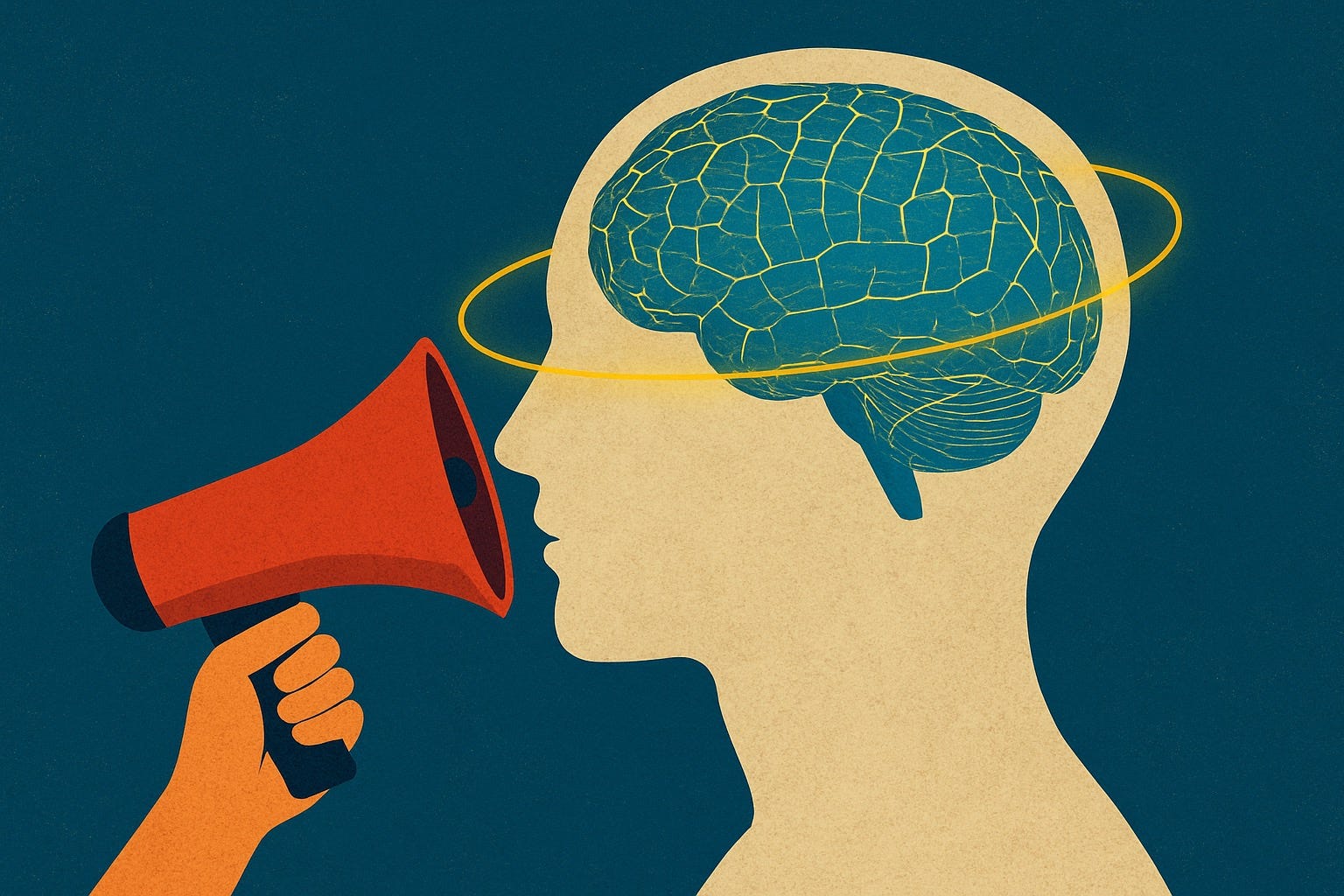
We assume intelligence is a shield against error. Yet the smarter we become, the better we get at fooling ourselves. Rationality, it turns our, is nor immunity to bias, but rather often a magnifier of it. The same cognitive horsepower that solves equations and builds models, also constructs beautifully coherent lies we call “logic”.
Economists call this the ‘rational expectations hypothesis’. Psychologists call it ‘motivated reasoning’, but both are versions of the same illusion, which is the idea that reason rules the mind, when in truth, it serves it.
We like to believe that we think our way to our beliefs, but more often, we feel our way there, and then recruit reason to justify the journey.
The Myth of Rational Man
Classical economics built a world around a fictional creature: Homo Economicus. He’s perfectly rational, self-interested, and maximises utility with surgical precision. He never panics in a crash, never buys overpriced tech stocks, and never texts his ex at 2 a.m.
Unfortunately, he doesn’t exist.
Real humans are emotional, inconsistent, and spectacularly bad at predictions - yet what’s fascinating is that the more intelligent we are, the better we become at ‘rationalising’ our inconsistencies.
The investor who “knows” she can time the market.
The policymaker who insists the data must be wrong.
The student who overthinks a problem into paralysis.
Intelligence doesn’t eliminate bias: it weaponises it. The smarter we are, the more elaborate our justifications become —> elegant mental models that conceal emotional impulses beneath numbers.
Rationality, in that sense, is not the absence of emotion, but rather its disguise.
The Cognitive Arms Race
In 1990, psychologist Ziva Kunda introduced the concept of ‘motivated reasoning’, which is the idea that reasoning is not designed to find truth, but to defend identity. When smart people think, they don’t search for evidence; they search for ammunition.
The more intelligent someone is, the better they are at finding reasons to support what they already believe. Intelligence doesn’t correct bias, but amplifies it by giving us sharper tools to defend it.
Economically, it’s a paradox of information. In Bayesian terms, intelligence often strengthens priors instead of updating them. We become overconfident in our mental models, and become convinced that our interpretation of data is the ‘rational’ one.
In 2008, some of the brightest minds on Wall Street built risk models so sophisticated they hid the very danger they were meant to reveal. PhDs and quants used mathematics not to clarify uncertainty, but actually to compress it into numbers that looked safe. It wasn’t stupidity that caused the crisis, but rather brilliance, misapplied.
Intelligence, like financial leverage, multiplies both gains and losses.
Rationality as Status
Being ‘rational’ is often less about truth and more about performance. In many social spaces, rationality is a form of signalling (a way to display intellect, composure, or superiority).
Economist Thorstein Veblen (name behind Veblen goods), wrote about ‘conspicuous consumption’, which is where consumers buy luxury goods to signal status. Modern elites don’t flaunt wealth; they flaunt reason. We might call it ‘conspicuous cognition’: showing off mental sophistication as a form of social currency.
We use reason as armour: a way to win arguments, gain respect, or hide vulnerability. Psychology calls this an ego ‘defence mechanism’. Economics calls it ‘signalling theory’.
That’s why debates on social media rarely change minds. They aren’t truth-seeking exercises, but are status games disguised as logic. Each side defends their narrative, mistaking intellectual combat for enlightenment.
The Emotional Roots of “Reason”
The irony is that reason itself depends on emotion. Neuroscientist Antonio Damasio famously studied patients who lost emotional capacity due to brain damage. Their logic was intact, but they couldn’t decide anything. Even simple choices, like what to eat, became impossible.
Emotion, it turns out, is not the enemy of reason, but is the engine.
Daniel Kahneman described two systems of thought:
- System 1: Fast, emotional, instinctive
- System 2: slow, deliberate, rational
System 2 doesn’t replace System 1: it serves it. Most of our ‘rational’ thinking is post-hoc justification for intuitive choices already made by System 1.
Economist Herbert Simon called this ‘bounded rationality’: our reasoning is always limited by cognitive capacity, information, and time. Yet we cling to the illusion of perfect reason because it feels safe: a way to impose order on chaos, you might say.
The belief in pure rationality is itself an emotional need: the need for control.
When To Trust Intuition (and When Not To)
So what’s the alternative?
The answer is not to reject reason, but to regulate it. It is to know when logic is clarifying reality and when it’s just rationalising emotion.
Psychologists call this ‘meta-rationality’: reasoning about your own reason. It is the ability to say, “I might be wrong, but let me find out why”.
In my opinion, true rationality is not about consistency, but rather about calibration. The best thinkers aren’t those who always trust their logic, but those who know when not to.
In economics, this is akin to market regulation. When left unchecked, speculation distorts value. Left unchecked, reasoning distorts truth. Both require mechanisms to correct excess.
The truly rational person isn’t the one who wins every argument, but the one who knows when to stop having them.
The Reconsidered Rational Mind
We live in an age of intellectual inflation. Everyone has data, opinions, models, but little epistemic humility. Intelligence has never been more abundant, yet wisdom never rarer.
The Rationality Illusion is not just a psychological quirk, but is a central paradox of our civilisation: the tools we built to master uncertainty (logic, analytics, algorithms, etc), have also made us overconfidence in our own understanding.
The smarter we get, the more elegant our delusions become.
Perhaps the next intellectual revolution won’t come from better reasoning, but from better self-awareness. From people who realise that thinking clearly is not the same as thinking truthfully.
Reasoning is not the opposite of emotion, but rather the expression if it written in a more convincing language.
Regarding the topic of the article, this is a realy insightful piece. It perfectly articulates how our intelligence can be a double-edged sword. The concept of motivated reasoning resonates deeply; it's a constant challenge even when designing seemingly rational AI systems that often just magnify inherent biases. Spot on.